Digital Indicator vs Dial Indicator: Accuracy, Resolution, and Best Applications
Indicators are essential tools for comparative measurement. They are widely used to check runout, flatness, alignment, deflection, and small dimensional differences that may not be obvious with ordinary measuring tools. In machine setup and inspection work, they often become the fastest way to see whether a part or machine condition is moving in the right direction.
Today, buyers usually compare two main types: the classic dial indicator and the digital indicator. Both are useful. Both can support precise inspection. But they do not feel the same in daily use, and they are not always equally convenient in every working environment.
This guide explains the main differences and helps industrial users decide which indicator style better fits their job.
What a Dial Indicator Offers
A dial indicator uses a mechanical pointer and graduated dial face to display movement. It has been a standard workshop tool for decades and remains highly relevant because of its simplicity and clear visual movement.
Key strengths of a dial indicator:
-
battery-free operation
-
immediate visual response
-
familiar to many machinists and inspectors
-
dependable mechanical design when handled correctly
Dial indicators are often preferred when users want direct needle movement for alignment or setup work.
What a Digital Indicator Offers
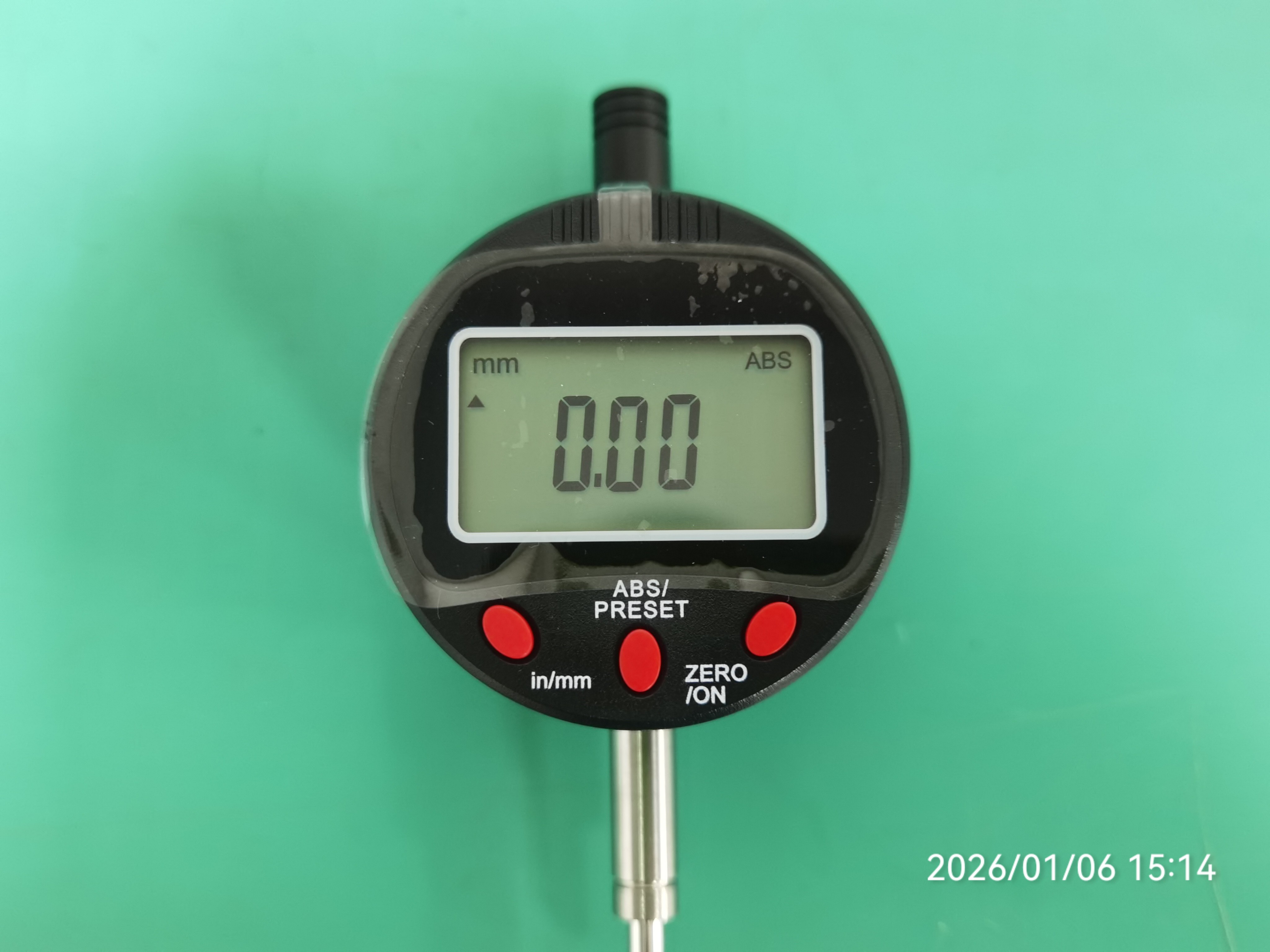
A digital indicator displays the measurement electronically. It can be easier to read for operators who want direct numeric results instead of interpreting a pointer position.
Key strengths of a digital indicator:
-
easy reading
-
useful for repeated comparison checks
-
often supports clear resolution display
-
helpful for operators who prefer numbers over dial interpretation
On the current site, the broader Dial Indicator category is where this measurement family is presented.
Accuracy and Resolution: What Buyers Should Really Compare
Accuracy and resolution are related, but they are not the same thing.
-
Resolution tells you the smallest displayed increment.
-
Accuracy tells you how close the result is to the true value under correct conditions.
A digital indicator may show very fine resolution, but buyers should still check overall performance, build quality, repeatability, and how the tool will actually be mounted and used.
In practical purchasing, it is smarter to compare:
-
repeatability
-
usable measuring range
-
mounting stability
-
operator readability
-
workshop suitability
than to focus only on the smallest displayed increment.
Readability and Workflow
This is often where the difference matters most.
Digital indicators
Digital models are excellent when:
-
multiple operators share the tool
-
quick reading is important
-
numeric clarity matters more than needle movement
-
operator training time should be reduced
Dial indicators
Dial models are excellent when:
-
users prefer seeing direction and magnitude through needle movement
-
the workshop wants a battery-free setup
-
the application is traditional machine alignment or setup work
Many experienced machinists still like dial indicators because the moving pointer gives an intuitive sense of change during adjustment.
Best Applications for Each Type
Digital indicators are often preferred for:
-
repetitive inspection work
-
fast comparison checks
-
workflows where clear numeric reading matters
-
users who want straightforward display output
Dial indicators are often preferred for:
-
spindle or part runout checks
-
alignment work
-
machine setup tasks
-
users who value direct visual movement feedback
Environmental and Maintenance Considerations
Power source
Digital indicators require battery management. Dial indicators do not.
Handling
Both types should be handled carefully, but buyers should remember that the overall durability of the tool depends heavily on design quality and correct use rather than only display type.
Cleanliness and mounting
Indicators are precision tools. A poor magnetic base, unstable fixture, or dirty contact condition can undermine the result no matter which display style is chosen.
How to Choose the Right Indicator
Ask these questions before buying:
-
Does the operator prefer a pointer or a number display?
-
Is battery-free use important?
-
Is the task machine setup or repetitive inspection?
-
Does the team need fast reading across multiple users?
-
How fine is the required resolution relative to the actual job?
The answers usually point clearly toward either digital or dial style.
FAQ
Is a digital indicator always more accurate than a dial indicator?
No. Digital display may improve reading ease, but true performance depends on the design, calibration, repeatability, and application setup.
Why do machinists still use dial indicators?
Because they are simple, battery-free, and very effective for alignment and comparative movement checks.
Which indicator is easier for beginners?
Digital indicators are usually easier for beginners because the measurement is shown directly as a number.
Conclusion
Digital indicators and dial indicators are both valuable tools for machining and inspection. Digital models emphasize readability and convenience. Dial models emphasize mechanical simplicity and intuitive visual feedback.
The best choice depends less on trends and more on the real task. If the job is repeated inspection with a need for easy reading, digital often makes sense. If the job is alignment, setup, and traditional comparative checking, a dial indicator may still be the better fit.